
Metal Machinability Explained
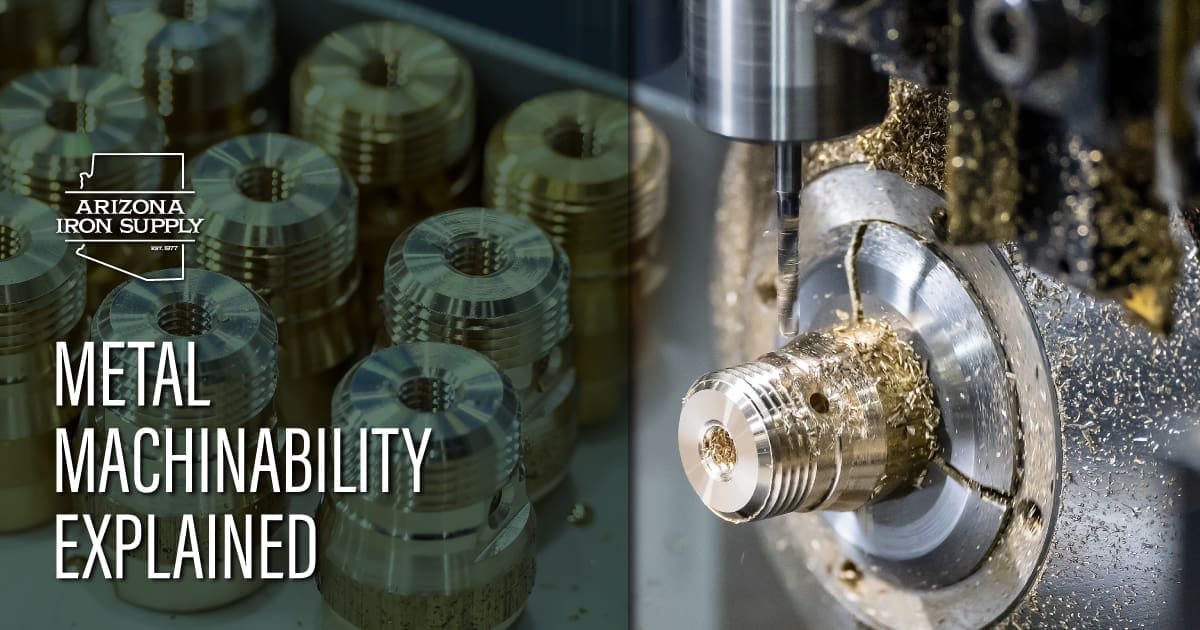
In industrial manufacturing in Phoenix, the machinability of materials selected for projects has significant short-term and long-term impact, and making the right choice for the application at hand can play a large part in a project’s success, cost, and timeliness.
What is the machinability of metal?
In the metal industry, a metal’s ability to be drilled, cut, or turned while maintaining its properties is referred to as its machinability. Every metal possesses a degree of machinability, and the degree is often based on the factors that include the following:
- Surface finish: Metals with high machinability will result in smoother finishes with relatively less effort compared with metals with low machinability
- Tool impact: The lower machinability a metal possesses, more effort required by tools, leading to greater tool wear
- Cutting speed: Softer, more machinable metals allow greater cutting speeds and feeds, thereby improving project cycles and efficiency
- Power consumption: Metals with greater machinability allow for lower power usage per cubic inch. Working with machinable metals will often result in a lower environmental footprint and lower overhead cost
There are a variety of factors that come into play with a metal’s machinability, leading to the ease or difficulty with which the metal can be machined. For example, metals that conduct heat well are generally more machinable. Also, while high-strength alloys are prized for many Tempe industrial metal attributes such as durability, they also present great machining challenges.
Here are a few of the metals we offer at Arizona Iron Supply that feature high degrees of machinability:
- Aluminum – This ubiquitous metal is popular in a wide variety of applications, including aerospace, automotive, and building construction.
- Brass – Among the easiest to machine, brass is able to maintain a smooth surface finish through machining. Brass is often used in valves, fittings, musical instruments, and more.
- Copper – Because of copper’s softness, it can be challenging to machine using standard processes, and may require unique considerations.
- Bronze – This strong metal is resistant to wear, and can be found in bearings, bushings, and marine applications. Because bronze is often alloyed with other metals, its machinability can vary depending on alloy type.
Contractors in Scottsdale who need to prioritize tight manufacturing schedules, large production quantities, and adherence to a conservative budget will seek metal that has high machinability. Keep in mind, however, that if other metal properties take precedence, such as heat resistance, high strength, and corrosion resistance, highly machinable metals may not always be the best choice.
When trying to determine the best metal for your job, it can be difficult to make a decision with so many competing factors to consider. Arizona Iron Supply can assist you with selecting the appropriate metals for your projects, as well as provide technical support for challenging applications.